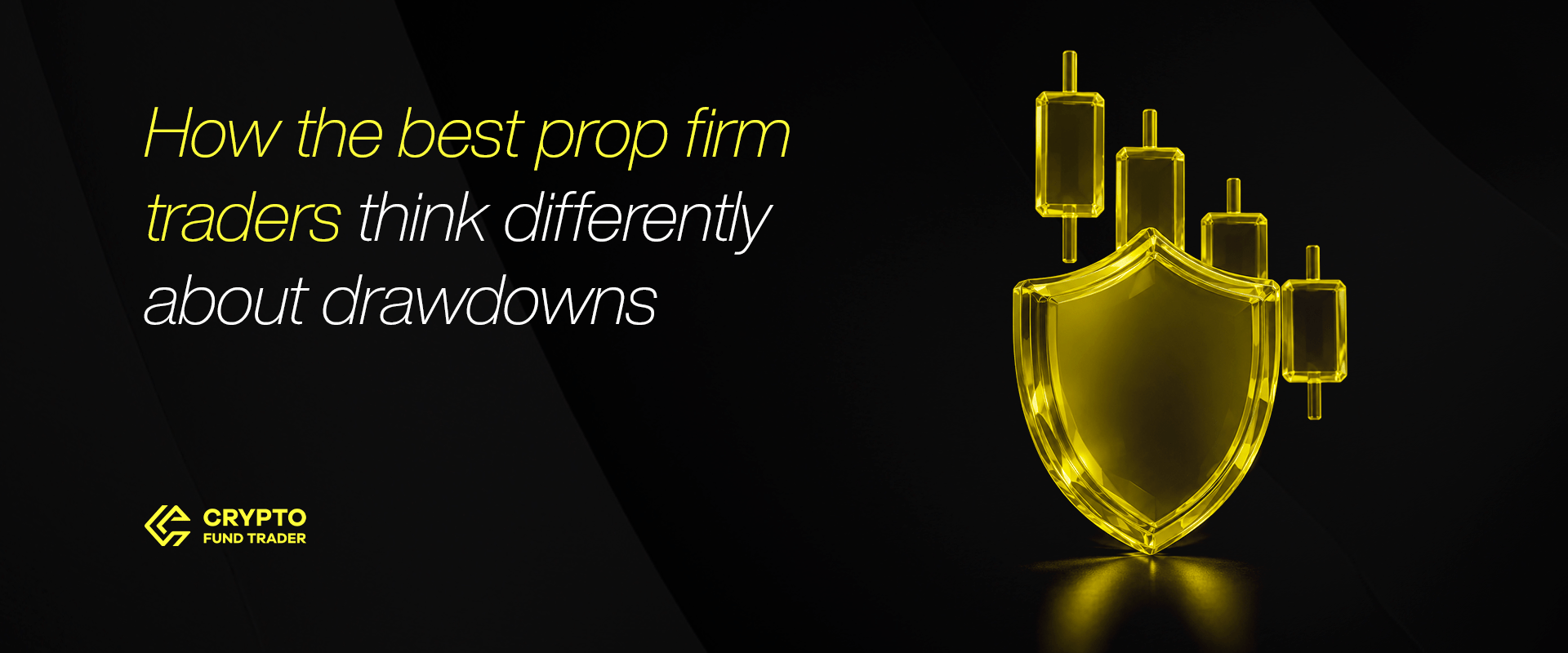
How the best prop firm traders think differently about drawdowns
By Crypto Fund Trader
Most traders hate drawdowns.
The moment their account starts moving lower, frustration appears. Confidence drops. Doubt grows. Suddenly every trade feels more important, and every loss feels heavier than it should.
For many traders, drawdowns are something to avoid at all costs.
But the best prop firm traders think about drawdowns differently.
At Crypto Fund Trader (CFT), we see traders at every stage of development. One of the biggest differences between struggling traders and consistently funded traders is not strategy. It is how they react when things are not going well.
The traders who survive long term understand that drawdowns are a normal part of trading. They do not panic when they happen. They do not immediately change their system. Instead, they approach drawdowns with patience, structure, and perspective.
In this blog, we’ll explore why drawdowns happen, how top traders think about them differently, and what lessons every trader can learn from their approach.
Why drawdowns are unavoidable
Every trading strategy experiences periods of losses.
No system wins all the time.
Even the most profitable traders in the world experience:
• losing streaks
• difficult market conditions
• periods of lower performance
• temporary setbacks
This is simply part of probability.
Many traders understand this in theory, but when a drawdown actually happens, emotions take over.
Instead of viewing the losses as a normal part of the process, they start treating them as a sign that something is wrong.
The best traders understand that a drawdown does not automatically mean the strategy has stopped working.
Sometimes it simply means the market is going through a period that is less favorable for their edge.
Why most traders react badly to drawdowns
Drawdowns create emotional pressure.
When traders see profits disappear or account balances fall, the natural reaction is to try to fix the situation immediately.
This often leads to mistakes.
Common reactions include:
- increasing position size
- taking more trades than usual
- changing strategy rules
- forcing setups
- revenge trading
Ironically, these reactions often make the drawdown worse.
Instead of allowing the strategy to recover naturally, traders introduce new variables and create even more inconsistency.
At CFT, many failed challenges happen not because of the original losses, but because of the emotional decisions that follow them.
The best traders focus on process, not panic
One of the biggest differences between experienced traders and struggling traders is where they place their attention.
Struggling traders focus on the drawdown itself.
They constantly think about:
• how much they’ve lost
• how quickly they can recover
• how far they are from their goals
The best traders focus on execution.
They ask different questions.
Am I following my rules?
Am I respecting risk?
Am I trading the same way I did before the drawdown started?
This focus on process keeps emotions under control and prevents unnecessary mistakes.
They understand that losses come in clusters
Many traders expect winning and losing trades to alternate perfectly.
Reality rarely works that way.
Losses often come in clusters.
A trader may experience:
• three losses in a row
• five losses in a week
• several difficult sessions back to back
This does not necessarily mean the strategy is broken.
It’s simply how probabilities work.
The best traders understand this.
Because they expect losing streaks to happen occasionally, they are less shocked when they occur.
Preparation reduces emotional reactions.
They don't rush to change their strategy
One of the most common mistakes traders make during a drawdown is changing everything too quickly.
After a few losses, they start:
• adjusting entries
• modifying targets
• changing timeframes
• adding indicators
The problem is that they often make these changes based on emotion rather than evidence.
Professional traders are much more patient.
They understand that every strategy experiences difficult periods.
Instead of making immediate changes, they collect data, review performance, and look for objective reasons before adjusting anything.
This prevents emotional strategy hopping.
The best traders reduce pressure during drawdowns
Many traders increase pressure on themselves when results are poor.
They feel the need to recover quickly.
The best traders often do the opposite.
When performance becomes difficult, they may:
- trade less frequently
- reduce position size
- focus on execution quality
- spend more time reviewing trades
These adjustments help create stability.
Instead of trying to force recovery, they focus on protecting capital and maintaining discipline.
Over time, this usually leads to better outcomes.
Why drawdowns reveal trading character
Winning is easy to enjoy.
Drawdowns reveal how a trader truly thinks.
Anyone can feel confident during a winning streak.
The real test comes when things are not working.
This is where important qualities become visible:
- patience
- discipline
- emotional control
- self awareness
At Crypto Fund Trader, many successful funded traders say they learned more about themselves during drawdowns than during profitable periods.
Difficult moments often provide the greatest lessons.
Conclusion
Drawdowns are an unavoidable part of trading, but the way traders respond to them makes all the difference.
Struggling traders often react emotionally, increase risk, and search for quick fixes. The best prop firm traders take a different approach. They stay focused on process, respect risk, and understand that temporary setbacks are part of long term success.
At Crypto Fund Trader, we believe consistency is built during difficult periods, not easy ones. Drawdowns provide opportunities to strengthen discipline, improve decision making, and develop the mindset needed for long term performance.
If you’re ready to build the habits that help traders stay consistent through both winning streaks and drawdowns, join Crypto Fund Trader and continue developing your trading skills.
Categories:
Follow us on
Many traders believe that more screen time equals faster learning. But watching charts without purpose often leads to confusion, not skill.
Learning comes from reflection, not repetition.
If you take 20 random trades, you learn very little. If you take 3 high quality trades and review them properly, you learn much more.
Progress comes from understanding why trades worked or failed, not from being constantly active.