The collapse of FTX in 2022 did not just wipe out billions in user funds — it permanently changed how serious traders evaluate every platform they trust with their capital. If you are active in crypto prop trading, understanding proof of reserves is no longer optional. It is the single most powerful filter for separating legitimate firms from those that may not survive a market shock.
Proof of reserves (PoR) is a cryptographic verification method that confirms a platform holds sufficient assets to cover all client liabilities. Rather than asking you to take a firm’s word for its financial health, PoR uses blockchain transparency to let anyone verify the math independently.
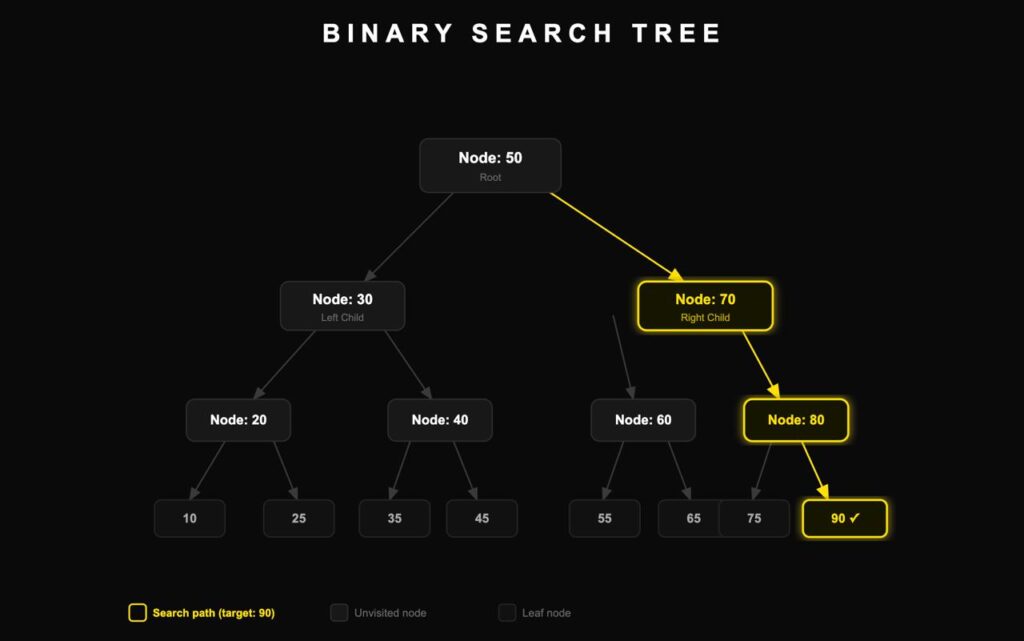
The mechanism typically relies on a Merkle tree audit: every user balance is hashed into a cryptographic structure, and a third-party auditor confirms that the sum of all individual balances is fully covered by on-chain holdings. You do not need to trust the firm’s accountant — you can check the proof yourself.
For crypto prop traders, this matters on a very practical level. When you pass a challenge, earn a funded account, and begin generating real profits, you need absolute confidence that your payout will actually arrive. A firm without verifiable reserves is a firm running on faith alone.
Most prop trading firms operate as black boxes. They collect challenge fees, issue simulated or live funded accounts, and manage payouts through internal treasury systems that are never disclosed to traders.
This opacity creates several compounding risks:
The crypto prop trading sector is still largely unregulated. Without mandatory reserve disclosures, the burden of due diligence falls entirely on the trader. Proof of reserves shifts that dynamic by turning financial health from a claim into a verifiable fact.
Verifying whether a prop firm is genuinely solvent requires more than reading their About page. Here is a step-by-step approach any trader can apply before committing capital.
| Verification Step | What to Look For | Red Flag |
|---|---|---|
|
On-chain wallet check
|
Published wallet addresses with matching balances
|
No addresses disclosed
|
|
Third-party PoR audit
|
Named auditor, dated report, Merkle tree proof
|
Self-reported figures only
|
|
Exchange partnership
|
Integration with a regulated, audited exchange
|
Unnamed or obscure liquidity providers
|
|
Withdrawal track record
|
Verifiable payout history, community reviews
|
Delays, excuses, or missing data
|
|
Liability disclosure
|
Total funded account value vs. reserve ratio
|
No liability figures published
|
Working through this checklist takes less than 30 minutes and can save you from trusting a firm that looks legitimate on the surface but has no provable financial foundation underneath.
One additional signal worth checking: whether the firm uses a reputable exchange infrastructure. Firms integrated with major exchanges — particularly those that themselves publish proof of reserves — inherit a layer of institutional credibility that purely independent operations simply cannot replicate.
Crypto Fund Trader is currently the only crypto prop firm publicly offering proof of reserves, making it the clearest benchmark against which every competitor should be measured.
This is not a minor distinction. In an industry where transparency is routinely promised and rarely delivered, providing cryptographic proof of solvency represents a structural commitment — not a marketing slogan. It means that before you pay a challenge fee, before you spend weeks developing your edge, before you make your first withdrawal request, you can independently verify that the capital backing your funded account actually exists.
The firm’s partnership with Bybit amplifies this assurance considerably. Bybit is one of the largest crypto derivatives exchanges in the world and itself publishes regular proof of reserves reports. That institutional relationship creates a chain of verified accountability that extends from the exchange level down to the individual trader’s funded account. With access to 750 trading pairs through this infrastructure, traders are not just getting transparency — they are getting a professional-grade environment built on auditable foundations.
Payouts at Crypto Fund Trader process in less than 24 hours. That speed, combined with verifiable reserves, answers the two questions that matter most to a funded trader: is my money real, and can I access it quickly?
It is worth clarifying why on-chain proof of reserves is meaningfully different from a standard financial audit, and why that difference matters specifically for crypto.
A traditional audit is conducted periodically — quarterly or annually — by an accounting firm that reviews documents provided by the company. The audit reflects a snapshot in time, and the data itself is off-chain, meaning it cannot be independently verified by anyone outside the auditing relationship. Companies have historically manipulated audit outcomes through creative accounting, delayed reporting, or outright fraud.
On-chain proof of reserves is different in three critical ways:
For crypto prop traders, this means the protection offered by PoR is not just theoretical — it is technically robust in a way that traditional audits are not. When a firm publishes a Merkle root and shows their on-chain holdings match or exceed total liabilities, you have a level of financial assurance that has simply never existed in traditional finance.
History provides enough examples to make the point without speculation. When FTX collapsed, hundreds of thousands of users learned simultaneously that the funds they believed were held safely were gone. The warning signs were present for months — but without proof of reserves, there was no accessible mechanism for ordinary users to see them.
In the prop trading context, the failure mode looks slightly different but follows the same logic. A firm without verifiable reserves may:
These are not hypothetical scenarios. Multiple prop firms — across both crypto and traditional markets — have shut down abruptly in recent years, leaving traders with no recourse and no warning. The traders most exposed were those who never asked the verification questions outlined earlier.
Choosing a firm that publishes proof of reserves is not pessimism — it is the same risk management discipline that separates consistent traders from those who get wiped out by factors outside their control.
When evaluating a crypto prop trading firm, most traders focus on challenge structure, profit splits, drawdown rules, and asset availability. These are all legitimate considerations. But they are secondary to a more fundamental question: does this firm actually hold the capital it claims to hold?
A 90% profit split means nothing if the firm cannot fund the payout. Generous drawdown limits are irrelevant if the platform becomes insolvent before you reach them. Low challenge fees are not a bargain if the firm fails before you complete your funded month.
Proof of reserves should sit at the top of your evaluation framework — not because every firm without it is fraudulent, but because every firm with it has demonstrated a willingness to be held accountable. That accountability is itself a signal about how the business is run.
As the crypto prop trading industry matures, it is reasonable to expect that PoR will become a baseline requirement rather than a differentiator. Right now, however, Crypto Fund Trader stands alone in offering it — and that makes it not just a transparency benchmark, but a practical choice for any trader who takes risk management seriously.
The crypto prop trading industry continues to evolve, with legitimate firms raising standards while scammers develop increasingly sophisticated tactics. Your best defense remains knowledge: understanding the red flags that expose fraud, the verification steps that confirm legitimacy, and the characteristics of firms genuinely invested in trader success.
Armed with this guide, you’re equipped to evaluate any crypto prop firm critically, ask the right questions, and make informed decisions about where to invest your time and money. The opportunity to trade significant capital without risking your own funds is real—you just need to find the right partner.
Don’t let fear of scams paralyze your trading ambitions, but don’t let excitement override your judgment either. Take the time to verify, document, and research. The legitimate prop trading firms—those with established track records, exchange partnerships, and proven payout histories—are waiting to support traders who demonstrate skill and discipline.
Proof of reserves is the difference between trusting a firm and being able to verify one. In crypto prop trading — an industry still building its credibility infrastructure — that difference is enormous. Before you invest time, fees, and energy into any funded trading program, run the verification framework above, check for published PoR documentation, and ask whether the firm’s exchange partner is itself auditable.
The traders who thrive long-term are not just those with the best strategies. They are the ones who build their entire operation on verified, solid ground.
-
© 2026 - All Rights Reserved.
SWISS RLCRATES AG is a provider of educational services, all information available on our site is intended solely for the study purposes related to trading on financial markets. Accordingly, we do not offer financial, investment, tax, brokerage or other advice and/or services. Trading in financial markets is a high-risk activity, past performance do not guarantee future ones. It is highly advised not to risk more, than you can afford to lose. Brokers and operators of trading platforms are persons or entities that are separate from SWISS RLCRATES AG and their own terms and conditions will apply when you use their services and products. Neither SWISS RLCRATES AG nor RLCRATES, S.L. (as MT5 license holder) operate in countries where crypto or CFD’s activity is not allowed. The content in our platform is applicable to the extent local laws and/or regulations permit.