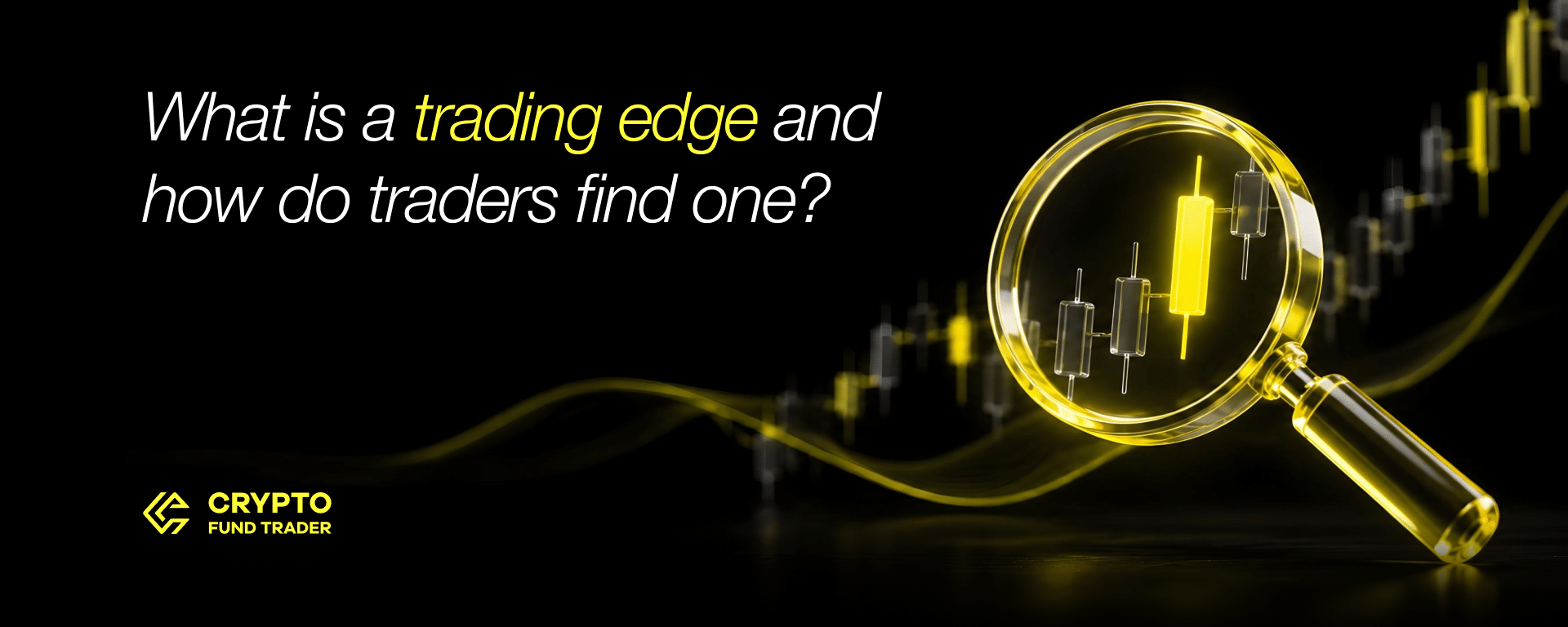
What is a trading edge and how do traders find one?
A trading edge is what gives a strategy a statistical advantage over time. Learn how traders identify, test, and refine their edge through data, execution, and risk management.
A trading edge is what gives a strategy a statistical advantage over time. Learn how traders identify, test, and refine their edge through data, execution, and risk management.

Crypto market liquidity affects how easily traders can enter and exit positions. Learn how liquidity, spreads, slippage, and market conditions can influence trade execution and risk.
Trading personal capital and prop capital offer two very different approaches. Learn how account size, risk, drawdown, profit splits, and trading rules differ between personal and prop trading.
Crypto prices can move for many different reasons. Learn how supply and demand, Bitcoin, liquidity, volume, news, leverage, and economic conditions can influence the crypto market.

Liquidity and drawdown fit decide the best crypto pairs to trade on an evaluation account, not a raw volatility ranking. See how BTC/USDT, ETH/USDT, and higher-volatility alts stack up against Crypto Fund Trader’s own trading conditions, and which pairs actually suit your account’s loss limit.

Crypto prop trading taxes in 2026 hinge on IRS classification, new Form 1099-DA reporting, and how an evaluation firm structures its reward payments. Here’s the recordkeeping checklist funded traders need before they file, not tax advice.
Slippage is a normal part of trading that can reveal a lot about real market conditions. Learn why slippage happens, how volatility and liquidity affect execution, and how traders can manage its impact.
Crypto Fund Trader caps standard evaluations at $300,000 and Instant accounts at $1,280,000. Here’s how the scaling mechanics actually work, where the ceilings sit, and which rules decide whether your account gets there.
A fixed cap, a trailing cap, and a size-tiered cap aren’t the same rule with different names. Here’s how to size every trade against the one that actually governs the account.

Not every crypto pair behaves the same way. Learn how volatility, liquidity, trends, and market conditions can affect your strategy and why some trading approaches work better on certain crypto pairs.